
Quick Answer
Usually yes, but the size of the win depends almost entirely on which brand you buy. Across 20,669 live pre-owned luxury listings that carry a recorded original retail price, the median asking price is 56.5% of retail — a typical saving of about USD 671 (AED 2,465) per item. But the range runs from Goyard at 86.0% of retail to Chloé at 35.1%. Buy the wrong brand pre-owned and you save little; buy the right one and you halve your cost.
What this article actually measures
Most articles that answer "is buying pre-owned luxury worth it?" answer it with opinion. This one answers it with a snapshot of a live marketplace.
On 22 October 2026 there were 36,417 items listed for sale on Libas Collective. Of those, 20,669 carry a recorded original retail price for that exact item alongside the current asking price. That pairing is what makes the question answerable: for each of those 20,669 pieces you can put the price a buyer pays today next to the price the same piece cost new, and read the ratio directly.
Three things about the method, stated plainly, because they change how you should read every number below:
- These are asking prices, not sale prices. They are what a buyer is quoted today, inclusive of the buyer service fee. They are not a record of what items eventually transacted at, and offers are frequently accepted below the ask. Every figure here is therefore a conservative read of the discount available — the realised discount is wider, not narrower.
- "Retail" means the item's own recorded original retail price, not today's replacement price for the closest current-season equivalent. For discontinued pieces the two are different things, and for anything Chanel has repriced since purchase they are very different things.
- It is one marketplace's inventory at one moment. A different platform with a different intake mix would produce different absolute numbers. What travels is the shape: the brand ordering, the size of the spread, and the direction of the outliers.
Prices are quoted in USD with the AED figure alongside, converted at 3.673 AED to the dollar, and each item's original retail price is converted to AED at the live exchange rate for its currency. Where the underlying data is in AED, the AED number is the exact one.
The headline number: 56.5%
The median live listing asks 56.5% of what the item cost new. In plain terms, the typical pre-owned luxury piece is a little over 40% off its original retail price.
In absolute money, the median item across the dataset had an original retail price of USD 1,630 (AED 5,987) and asks USD 775 (AED 2,848) today. The median saving is USD 671 (AED 2,465).
That is the answer to the question as most people ask it. But a median hides the thing that actually decides whether your specific purchase is worth it, which is how wide the distribution is:
| Percentile of listings | Asking price as % of retail | Effective discount |
|---|---|---|
| 10th percentile (deepest discounts) | 30.4% | 70% off |
| 25th percentile | 41.6% | 58% off |
| Median | 56.5% | 44% off |
| 75th percentile | 72.6% | 27% off |
| 90th percentile (shallowest) | 89.1% | 11% off |
Put another way: 38.4% of all live listings ask less than half of retail, and 22.6% ask less than 40%. At the other end, 4.7% ask more than the item cost new. The pre-owned market is not one market with one discount. It is at least two markets sitting inside the same catalogue.
It depends on the brand — and the gap is 2.5×
This is the single most useful table in the article. It is the median asking price as a percentage of original retail, by brand, for every brand with at least 100 qualifying live listings.
| Brand | Listings | Median ask as % of retail | Typical discount | Median retail | Median ask |
|---|---|---|---|---|---|
| Goyard | 129 | 86.0% | 14% | AED 10,689 | AED 9,069 |
| Chanel | 3,369 | 69.1% | 31% | AED 13,223 | AED 9,680 |
| Hermès | 1,192 | 66.0% | 34% | AED 3,306 | AED 2,307 |
| Louis Vuitton | 4,522 | 61.2% | 39% | AED 5,510 | AED 3,042 |
| Dior | 1,247 | 54.2% | 46% | AED 14,325 | AED 7,425 |
| Loewe | 338 | 53.6% | 46% | AED 4,665 | AED 2,175 |
| Saint Laurent | 726 | 52.7% | 47% | AED 7,309 | AED 3,567 |
| Fendi | 730 | 51.7% | 48% | AED 4,224 | AED 2,183 |
| Gucci | 3,557 | 50.9% | 49% | AED 4,591 | AED 2,213 |
| Burberry | 613 | 48.7% | 51% | AED 2,938 | AED 1,478 |
| Balenciaga | 310 | 48.5% | 52% | AED 4,408 | AED 2,098 |
| Prada | 1,430 | 47.9% | 52% | AED 4,775 | AED 2,332 |
| Miu Miu | 143 | 45.4% | 55% | AED 5,135 | AED 2,213 |
| Celine | 744 | 44.6% | 55% | AED 7,714 | AED 2,870 |
| Bottega Veneta | 872 | 40.7% | 59% | AED 7,607 | AED 2,798 |
| Valentino | 189 | 40.2% | 60% | AED 5,510 | AED 2,213 |
| Chloé | 196 | 35.1% | 65% | AED 5,510 | AED 1,890 |
Goyard sits at the top of that table on the smallest sample — 129 qualifying listings — and it is the most extreme reading in the entire dataset: a median ask of 86.0% of retail, with a quarter of its listings above 97.3%. Goyard's own distribution model, which restricts stock and publishes no price list, produces a secondary market that barely discounts at all.
So the honest answer to "is it worth buying pre-owned" is that the same question has a 2.5× different answer depending on the label. On Chloé, pre-owned is a genuine two-thirds discount. On Goyard, it is a convenience purchase — you are buying availability, not savings.
Why the ordering looks the way it does
The brands at the top of that table are the ones that combine three things: tightly controlled supply, regular retail price increases, and models that stay in the line for decades. Each of those independently props up the secondary price. Chanel's classic flap has been repriced upward repeatedly, so a piece bought several years ago is being compared against a retail figure that no longer exists at the boutique — which is exactly why Chanel supplies 339 of the 979 listings asking above original retail.
The brands at the bottom tend to be the opposite: broader distribution, heavier seasonal turnover, and a design language that moves. A bag that was unmistakably the bag of a particular season depreciates like a season, not like an heirloom. That is not a criticism of the product — a Chloé bag is not worse than a Goyard tote — but it is a real and measurable fact about what happens to its price.
It depends on the category, too
Bags dominate the dataset, so the headline figure is largely a bag figure. The smaller categories behave differently:
| Category | Qualifying listings | Median ask as % of retail |
|---|---|---|
| Accessories | 1,147 | 64.5% |
| Jewellery | 659 | 62.7% |
| Shoes | 34 | 56.5% |
| Bags | 18,794 | 55.6% |
| Clothing | 35 | 33.5% |
Jewellery and small accessories hold value better than bags. Both have a straightforward explanation: fine jewellery carries a metal and stone floor that a handbag does not, and small leather goods are simple objects with little to go wrong, so condition variance is narrow and the discount for wear is small. Note that the shoes and clothing samples here are tiny — 34 and 35 listings — and should be read as a directional hint, not a finding. The bags and jewellery numbers sit on samples large enough to trust.
If you want to see how this plays out at the level of individual models over time rather than in a single snapshot, the tracked pre-owned luxury price index follows the same catalogue month by month.
The counterintuitive one: mid-priced items discount hardest
You would expect the discount to widen smoothly as items get more expensive, or narrow smoothly as they get cheaper. Neither happens. Sorted by the item's original retail price:
Shop Pre-Owned Chanel — Live Now
View all Chanel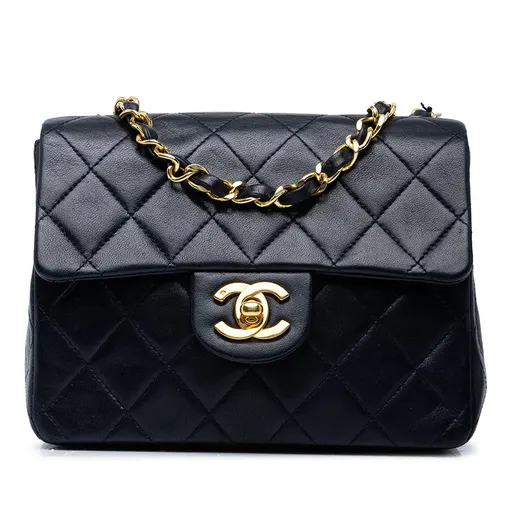
Chanel
Mini Square Classic Lambskin Single Flap
View piece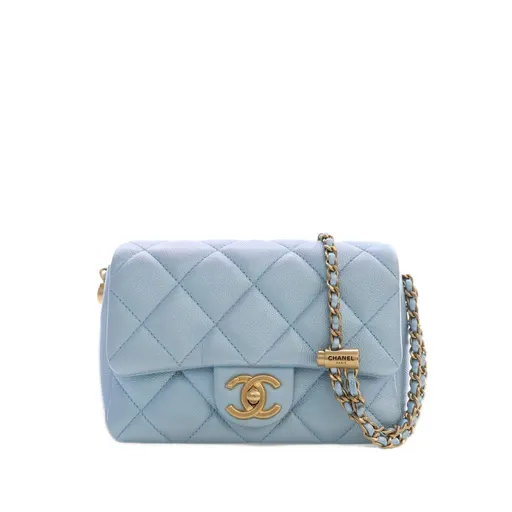
Chanel
Mini Quilted Iridescent Caviar My Perfect Flap
View piece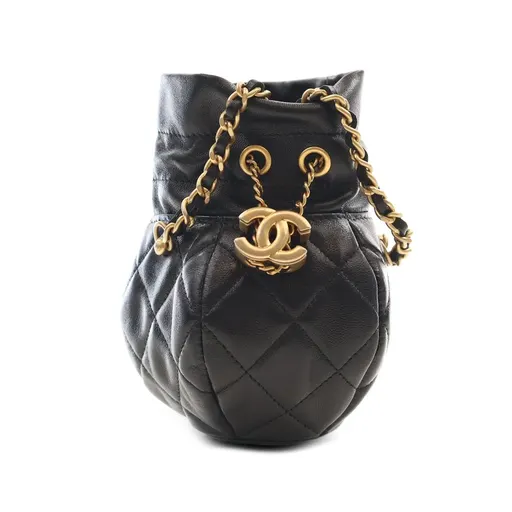
Chanel
CC Shiny Lambskin Quilted Drawstring Clutch with Chain
View piece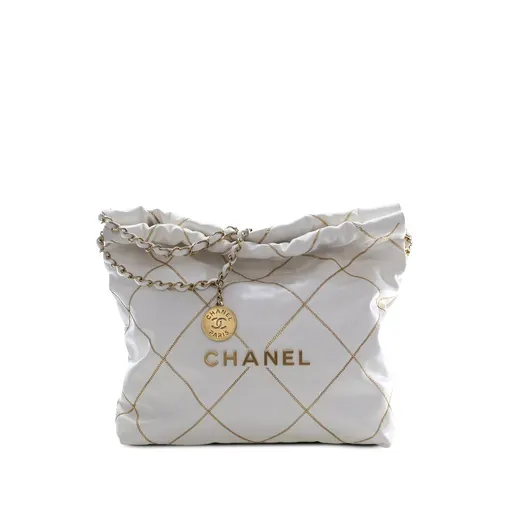
Chanel
Small Quilted Shiny Calfskin Chain 22 Handbag
View piece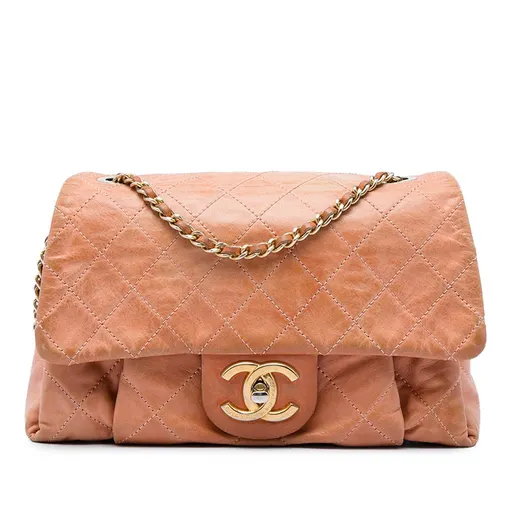
Chanel
Small Quilted Iridescent Calfskin Chic Quilt Flap
View piece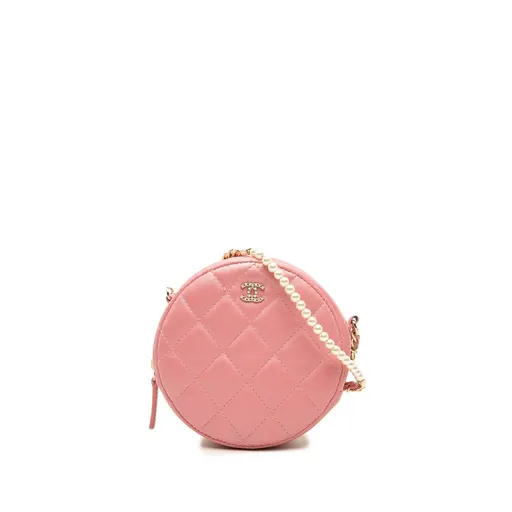
Chanel
Quilted Lambskin Round Pearl Clutch with Chain
View piece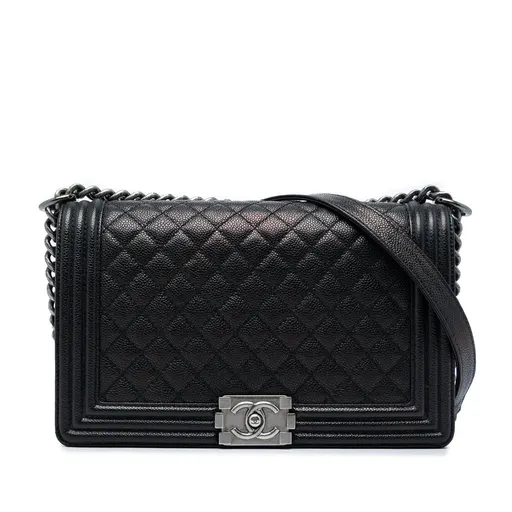
Chanel
Large Quilted Caviar Boy Flap
View piece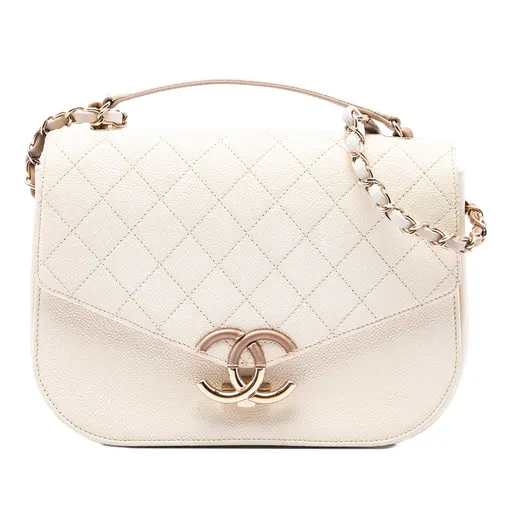
Chanel
Medium Caviar Paris Cuba Thread Around Flap
View piece| Original retail price band | Listings | Median ask as % of retail |
|---|---|---|
| Under AED 5,000 (under ~USD 1,360) | 8,500 | 61.5% |
| AED 5,000–10,000 (~USD 1,360–2,720) | 6,837 | 48.7% |
| AED 10,000–20,000 (~USD 2,720–5,450) | 4,025 | 57.8% |
| AED 20,000–50,000 (~USD 5,450–13,600) | 1,197 | 54.9% |
| Above AED 50,000 (above ~USD 13,600) | 110 | 68.9% |
The deepest discounts sit in the AED 5,000–10,000 retail band — roughly USD 1,360 to 2,720 — at 48.7% of retail. That band is where the "entry designer bag" lives: expensive enough to have been an occasion purchase, not scarce enough to have a waiting list. It has the largest gap between what buyers paid and what buyers will pay.
Both ends of the range hold up better, for opposite reasons. Cheap items (under AED 5,000 retail) hold up because there is a price floor below which listing an item is not worth anyone's time, so the discount compresses. Expensive items (above AED 50,000) hold up because at that level you are usually buying scarcity, and scarcity does not discount. The sample in that top band is only 110 listings, so treat it as an indication rather than a rule.
The practical read: if you are choosing what to buy pre-owned rather than which brand, the sweet spot is the item that retailed between about USD 1,400 and USD 2,700. That is where the market gives away the most.
When pre-owned is NOT worth it
An honest answer has to include the cases where the answer is no.
1. When the item asks more than it cost new
979 live listings — 4.7% of the dataset — ask above their original retail price. Chanel accounts for 339 of them, Louis Vuitton 218, Gucci 98, Hermès 66. For these, "pre-owned is cheaper" is simply false, and the pitch is different: the item is discontinued, or the boutique price has risen past it, or it is not obtainable at retail without a purchase history. You may still want it. You are not saving money on it.
2. When the piece is current-season and widely stocked
If the exact item is sitting in the boutique today at a price you can pay, the pre-owned discount has to be large enough to compensate for buying a used object with no warranty, no boutique returns, and no gift experience. On a current-season, freely available bag that discount is usually thin — and you have given up meaningful protections to get it.
3. When the condition discount is the whole discount
A very cheap listing is sometimes cheap because the item is damaged in a way that is expensive to fix. Corner wear, heat-warped leather, replaced hardware and interior staining are all real and all costly. A restoration on a leather bag can run into several hundred dollars, which can erase a large part of the headline saving. Read the condition grade and the photographs before you read the price.
4. When you cannot verify authenticity
This is the one that turns a good deal into a total loss rather than a small one. A counterfeit is not worth a discount; it is worth nothing. Buying from a platform that authenticates before the item ships, and that stands behind the outcome, is the difference between a market with a 40% discount and a market with a lottery in it.
Where counterfeit risk actually concentrates
Counterfeit exposure is not spread evenly across the second-hand market. It clusters in two predictable places, and both are avoidable.
By channel. Risk rises sharply the further you get from a transaction where somebody inspects the item before it ships. Peer-to-peer sales arranged through social media, general classified listings, group chats and forum trades all move the item directly from a stranger to you with no inspection step in between. Physical markets in tourist districts are the same problem in person. General marketplaces that authenticate only after a buyer complains are better, but the protection is retrospective. The channels with the lowest exposure are the ones where an item is physically examined by the platform before payment is released and where a negative verdict stops the sale rather than starting a dispute.
By model. Fakes follow volume and recognisability, not value. The most-produced, most-recognisable references are the most-copied ones, because a counterfeit only works if the buyer can identify what it is imitating. In this catalogue the highest-volume brands are Louis Vuitton (4,522 listings), Gucci (3,557) and Chanel (3,369) — and their signature canvas and quilted references are exactly the pieces with the largest counterfeit industries behind them. Rarer references are copied less, but when they are copied the fakes tend to be better, because the economics justify the effort.
The practical rule is that neither a low price nor a high price tells you anything about authenticity. A convincing fake can be priced at 70% of retail specifically to look legitimate. Only inspection tells you, which is why the channel matters more than the listing.
The costs that don't appear in the asking price
The 56.5% figure is a price comparison, not a total-cost-of-ownership comparison. Before deciding, price in:
- Import duty and tax. Buying across a border can add materially to the landed cost. This is frequently the single largest hidden line, and it is charged on the item's value, not the discount.
- Shipping and insurance on a high-value parcel.
- Restoration or refurbishment if you are buying at the lower condition grades — cleaning, re-dyeing, hardware replacement, or a new interior lining.
- Servicing on watches, where a full service is a recurring multi-year cost independent of what you paid.
- Resizing and certification on jewellery.
- The absence of a retail warranty. Most pre-owned purchases carry a platform guarantee on authenticity and description, not a manufacturer's warranty on the object.
None of these is a reason not to buy pre-owned. All of them are reasons to compare the landed price against the boutique price rather than comparing two headline numbers.
A decision framework you can actually apply
Working from the data above, here is how to decide in order:
- Check whether the item is still sold at retail. If it is not, the pre-owned market is the only market and the price question becomes a scarcity question, not a discount question.
- Look up the brand's typical retention band. If it is a high-retention brand (Hermès, Chanel, Goyard), expect to pay 65–85% of retail and treat anything below 60% as a signal to look harder at condition and authenticity, not as a bargain. If it is a lower-retention brand (Bottega Veneta, Valentino, Chloé, Celine), a 40% ask is normal and a 70% ask is a bad deal.
- Compare against the item's own retail price, not the brand's current flagship price. These diverge sharply on brands that reprice often.
- Read the condition grade before the price. Then decide whether the discount compensates for the specific defects listed, not for wear in the abstract.
- Confirm how authentication works — who does it, at what point in the transaction, and what happens if the verdict is negative after you have paid.
- Add the landed costs — duty, shipping, any restoration — and only then compare with the boutique.
If you are browsing rather than hunting a specific reference, the current pre-owned designer bag inventory is the fastest way to see where real asking prices sit for a given brand and model right now.
What if you might resell it later?
For a lot of buyers "is it worth it" really means "will I get my money back". The data has something useful to say here, and it is not the usual answer.
The brands that hold value best in the table above are the same brands where the pre-owned discount is smallest. That is not a coincidence — it is the same fact seen from two sides. Buying a high-retention brand means paying more now and losing less later; buying a low-retention brand means paying much less now and losing more later. There is no option that is cheap to buy and expensive to sell.
What the second-hand discount does change is the shape of the loss. If you buy a Chloé bag at 35% of retail, the money you can still lose is limited by definition — most of the depreciation has already happened to somebody else. Buying deep into an already-depreciated asset is a genuinely different risk profile from buying at retail, and for many buyers it is the more comfortable one. The seller of that bag took the loss; you are buying afterwards.
Shop Pre-Owned Goyard — Live Now
View all Goyard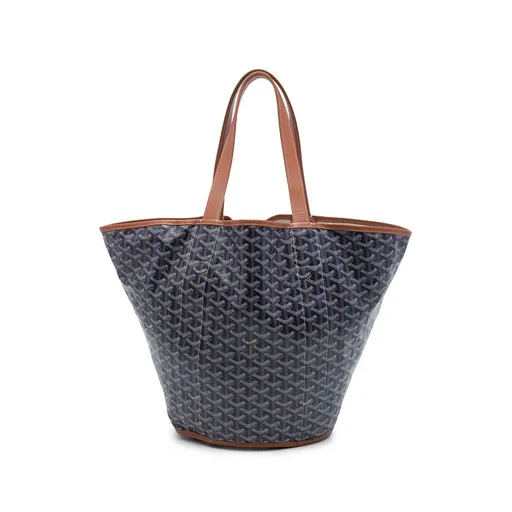
Goyard
Goyardine Reversible Belharra Tote
View piece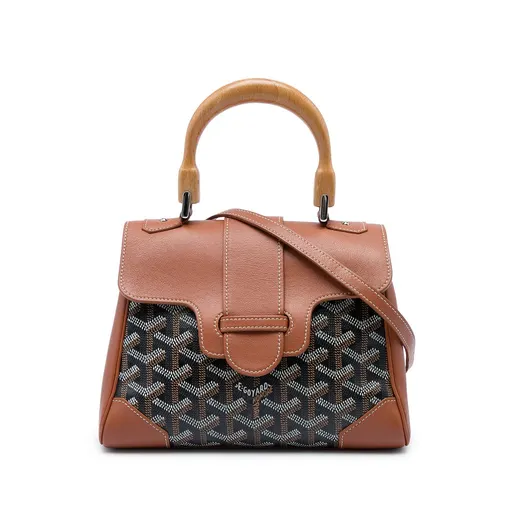
Goyard
Mini Goyardine Saigon Souple
View piece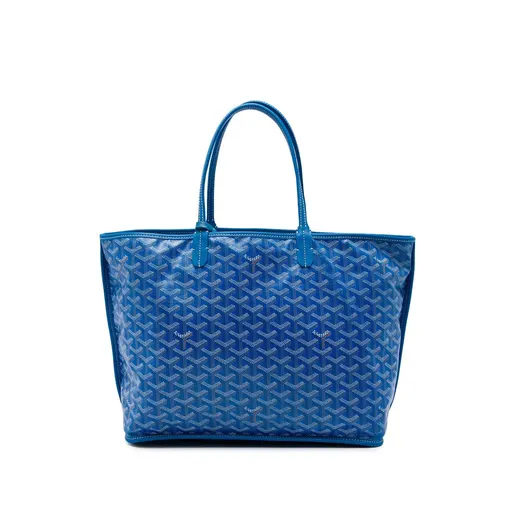
Goyard
Goyardine Reversible Anjou PM
View piece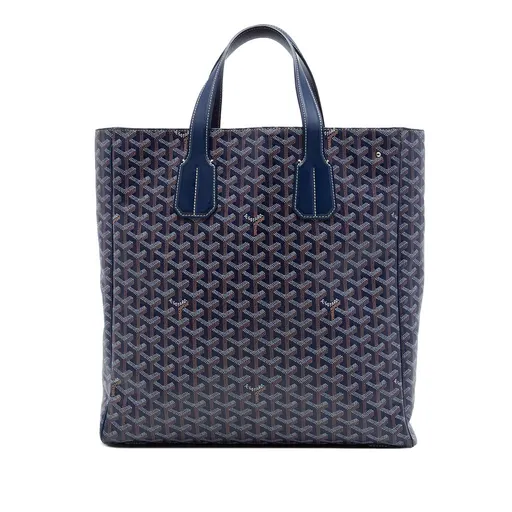
Goyard
Goyardine Voltaire III
View piece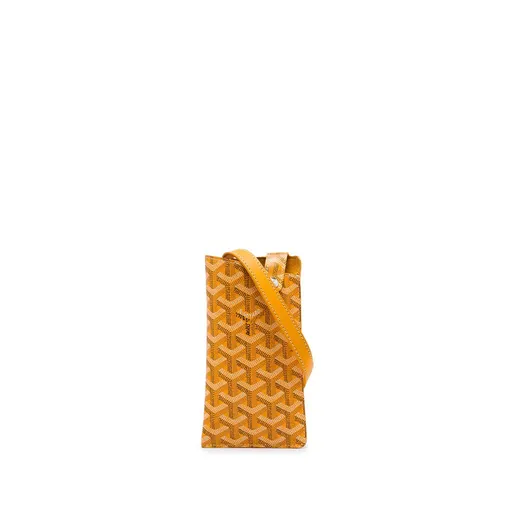
Goyard
Goyardine Montmartre GM Glasses Case
View piece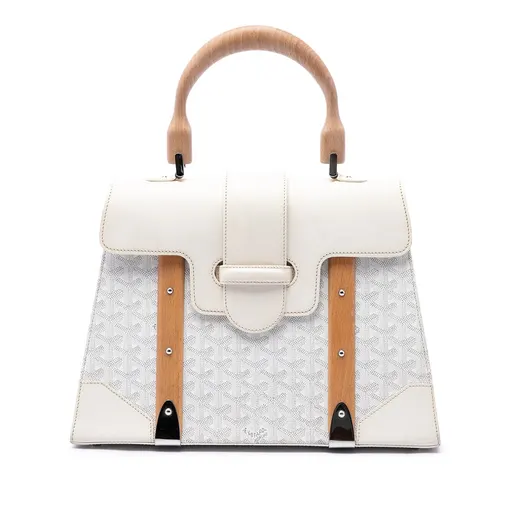
Goyard
Goyardine Saigon Structured MM
View piece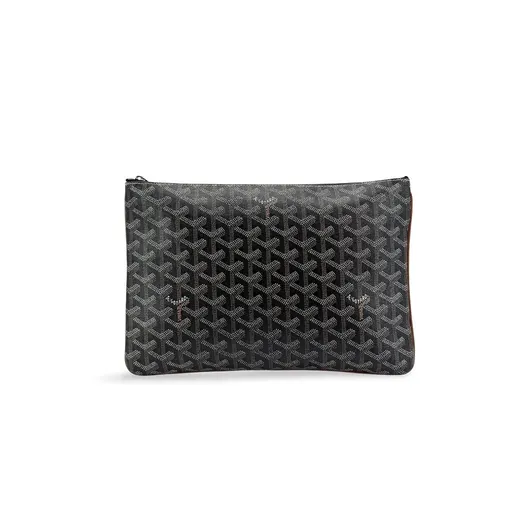
Goyard
Senat Pouch PM Black
View piece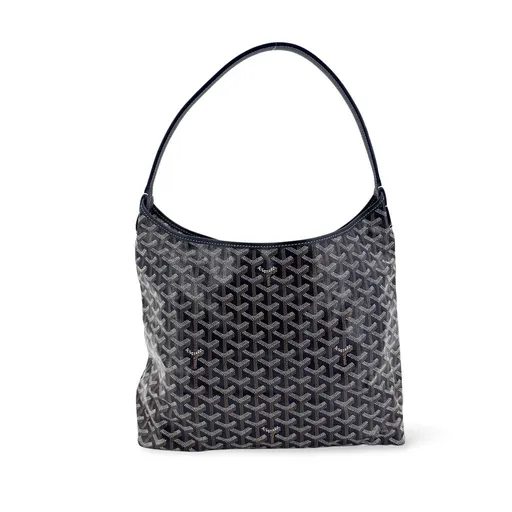
Goyard
Boheme Hobo Bag Navy
View pieceIf reselling is part of your plan from the start, it is worth understanding the fee structure and payout timing on whichever platform you would eventually use — how selling works is the relevant detail, and it materially changes the arithmetic on a low-retention piece.
So: is it worth it?
On the numbers, for most buyers, yes — but the useful version of the answer is conditional:
- Yes, clearly, if you are buying a discontinued or hard-to-obtain reference, or a lower-retention brand where the discount runs to 55–65%, or an item that retailed in the USD 1,400–2,700 band.
- Yes, but for access rather than savings, if you are buying Hermès, Chanel or Goyard. Expect roughly 15–35% off, and understand that you are mostly paying to skip a waiting list.
- Probably not, if the piece is current-season, freely available at retail, and the discount is under 20% — you are trading real protections for a small number.
- No, if you cannot establish authenticity to your own satisfaction. At that point the discount is irrelevant.
The single number is 56.5% of retail. The single most important thing to know about that number is that it is an average of two very different markets, and which one you are shopping in is decided before you look at any price tag.
Frequently asked questions
How much cheaper is pre-owned luxury than retail?
Across 20,669 live listings with a recorded original retail price, the median asking price is 56.5% of retail — a typical discount of about 44%. The middle half of listings sit between 41.6% and 72.6% of retail. In absolute terms the median item retailed at AED 5,987 (about USD 1,630) and asks AED 2,848 (about USD 775).
Which luxury brands hold their value best on the second-hand market?
In this dataset Goyard holds value best at a median 86.0% of retail, followed by Chanel at 69.1% and Hermès at 66.0%. Louis Vuitton is at 61.2%. These are the brands where pre-owned buying saves the least, precisely because their resale prices stay high.
Which luxury brands depreciate most?
Chloé shows the steepest depreciation at a median 35.1% of retail, followed by Valentino at 40.2%, Bottega Veneta at 40.7% and Celine at 44.6%. If your priority is the largest discount rather than the strongest resale, these are where the pre-owned market gives most.
Do any pre-owned luxury items cost more than retail?
Yes. 979 listings — 4.7% of the dataset — ask more than the item's original retail price. Chanel accounts for 339 of them and Louis Vuitton 218. These are typically discontinued references, or pieces whose boutique price has risen past what the item originally cost.
What price range gives the biggest pre-owned discount?
Items that originally retailed between AED 5,000 and AED 10,000 (roughly USD 1,360–2,720) show the deepest discounts, asking a median 48.7% of retail. Both cheaper items (61.5%) and items above AED 50,000 retail (68.9%) hold up better.
Is pre-owned jewellery a better deal than pre-owned bags?
No — jewellery discounts less. Pre-owned jewellery asks a median 62.7% of retail against 55.6% for bags, and accessories are higher still at 64.5%. Fine jewellery has a metal and stone value floor that a handbag does not, which limits how far its price can fall.
Are these figures actual sale prices?
No. They are current asking prices, inclusive of the buyer service fee, taken from live listings. Offers are frequently accepted below the asking price, so the realised discount is wider than these figures show, not narrower. Treating an asking price as a sale price would overstate what sellers actually receive.
What hidden costs should I add to a pre-owned luxury purchase?
Import duty and tax if you buy across a border, shipping and insurance on a high-value parcel, any restoration needed at lower condition grades, servicing for watches, and resizing or certification for jewellery. Compare the landed cost against the boutique price rather than comparing two headline numbers.
Is buying pre-owned risky?
The material risk is authenticity, not condition — a damaged item is worth a discount, a counterfeit is worth nothing. Have the piece authenticated before it ships, buy from a seller that stands behind the verdict, and read the condition grade and photographs before you read the price.
Should I buy pre-owned if I plan to resell?
The brands that resell best are the same ones that discount least when you buy them, so there is no option that is cheap to buy and expensive to sell. What buying pre-owned does change is that much of the depreciation has already been absorbed by the first owner, which limits how much value you can still lose.
Does a pre-owned luxury item come with a warranty?
Generally not a manufacturer's warranty. Reputable platforms provide a guarantee on authenticity and on the accuracy of the item description, which is a different thing. Factor the absence of a retail warranty into any comparison where the item is still freely available new.
When is it better to buy new instead?
When the exact item is current-season, stocked at the boutique, and the pre-owned discount is under about 20%. At that point you are giving up a warranty, boutique returns and guaranteed condition for a small saving. It is also better to buy new if you cannot verify the pre-owned item's authenticity to your own satisfaction.
{"@context":"https://schema.org","@type":"FAQPage","mainEntity":[
{"@type":"Question","name":"How much cheaper is pre-owned luxury than retail?","acceptedAnswer":{"@type":"Answer","text":"Across 20,669 live listings with a recorded original retail price, the median asking price is 56.5% of retail — a typical discount of about 44%. The middle half of listings sit between 41.6% and 72.6% of retail. In absolute terms the median item retailed at AED 5,987 (about USD 1,630) and asks AED 2,848 (about USD 775)."}},
{"@type":"Question","name":"Which luxury brands hold their value best on the second-hand market?","acceptedAnswer":{"@type":"Answer","text":"In this dataset Goyard holds value best at a median 86.0% of retail, followed by Chanel at 69.1% and Hermès at 66.0%. Louis Vuitton is at 61.2%. These are the brands where pre-owned buying saves the least, precisely because their resale prices stay high."}},
{"@type":"Question","name":"Which luxury brands depreciate most?","acceptedAnswer":{"@type":"Answer","text":"Chloé shows the steepest depreciation at a median 35.1% of retail, followed by Valentino at 40.2%, Bottega Veneta at 40.7% and Celine at 44.6%. If your priority is the largest discount rather than the strongest resale, these are where the pre-owned market gives most."}},
{"@type":"Question","name":"Do any pre-owned luxury items cost more than retail?","acceptedAnswer":{"@type":"Answer","text":"Yes. 979 listings — 4.7% of the dataset — ask more than the item's original retail price. Chanel accounts for 339 of them and Louis Vuitton 218. These are typically discontinued references, or pieces whose boutique price has risen past what the item originally cost."}},
{"@type":"Question","name":"What price range gives the biggest pre-owned discount?","acceptedAnswer":{"@type":"Answer","text":"Items that originally retailed between AED 5,000 and AED 10,000 (roughly USD 1,360–2,720) show the deepest discounts, asking a median 48.7% of retail. Both cheaper items (61.5%) and items above AED 50,000 retail (68.9%) hold up better."}},
{"@type":"Question","name":"Is pre-owned jewellery a better deal than pre-owned bags?","acceptedAnswer":{"@type":"Answer","text":"No — jewellery discounts less. Pre-owned jewellery asks a median 62.7% of retail against 55.6% for bags, and accessories are higher still at 64.5%. Fine jewellery has a metal and stone value floor that a handbag does not, which limits how far its price can fall."}},
{"@type":"Question","name":"Are these figures actual sale prices?","acceptedAnswer":{"@type":"Answer","text":"No. They are current asking prices, inclusive of the buyer service fee, taken from live listings. Offers are frequently accepted below the asking price, so the realised discount is wider than these figures show, not narrower. Treating an asking price as a sale price would overstate what sellers actually receive."}},
{"@type":"Question","name":"What hidden costs should I add to a pre-owned luxury purchase?","acceptedAnswer":{"@type":"Answer","text":"Import duty and tax if you buy across a border, shipping and insurance on a high-value parcel, any restoration needed at lower condition grades, servicing for watches, and resizing or certification for jewellery. Compare the landed cost against the boutique price rather than comparing two headline numbers."}},
{"@type":"Question","name":"Is buying pre-owned risky?","acceptedAnswer":{"@type":"Answer","text":"The material risk is authenticity, not condition — a damaged item is worth a discount, a counterfeit is worth nothing. Have the piece authenticated before it ships, buy from a seller that stands behind the verdict, and read the condition grade and photographs before you read the price."}},
{"@type":"Question","name":"Should I buy pre-owned if I plan to resell?","acceptedAnswer":{"@type":"Answer","text":"The brands that resell best are the same ones that discount least when you buy them, so there is no option that is cheap to buy and expensive to sell. What buying pre-owned does change is that much of the depreciation has already been absorbed by the first owner, which limits how much value you can still lose."}},
{"@type":"Question","name":"Does a pre-owned luxury item come with a warranty?","acceptedAnswer":{"@type":"Answer","text":"Generally not a manufacturer's warranty. Reputable platforms provide a guarantee on authenticity and on the accuracy of the item description, which is a different thing. Factor the absence of a retail warranty into any comparison where the item is still freely available new."}},
{"@type":"Question","name":"When is it better to buy new instead?","acceptedAnswer":{"@type":"Answer","text":"When the exact item is current-season, stocked at the boutique, and the pre-owned discount is under about 20%. At that point you are giving up a warranty, boutique returns and guaranteed condition for a small saving. It is also better to buy new if you cannot verify the pre-owned item's authenticity to your own satisfaction."}}
]}