
Quick Answer
Start with the interior label: FENDI on the first line, Roma below it, Made in Italy underneath, sewn rather than glued, with a serial of roughly 15 to 17 alphanumeric characters. Every Fendi made after the 1980s carries one, so its absence on a modern bag is itself a red flag. Then check that the FF pattern mirrors and aligns at every seam and that hardware is heavy and deeply engraved.
Fendi is one of Italy's most storied luxury houses, and the Fendi Baguette is arguably the bag that redefined the concept of the It bag. As demand for pre-owned Fendi grows — particularly in Dubai and across the UAE — so does the market for convincing counterfeits. This guide walks you through every authentication checkpoint that matters before you buy.
The Interior Label: Start Here
Every authentic Fendi bag has a leather label sewn into the interior lining. It reads FENDI on the first line, Roma below, and Made in Italy underneath that. A serial number is printed below — a combination of letters and numbers unique to that piece.
The most common fake tell: a label that is glued rather than stitched, or one with inconsistent font spacing. Hold the label and feel for stitching around its edges. If it peels or lifts, it is not genuine.
The FF Logo and Zucca Canvas
On bags featuring the iconic Fendi zucca or FF canvas, the double-F logo must be perfectly mirrored and consistently aligned across the entire surface. Fendi designs each bag so the FF pattern is centred on the front panel — it never gets cut off awkwardly at a seam or edge.
Examine the pattern where the front panel meets the side panels. On authentic pieces, the canvas is cut and assembled so the motif flows naturally. On fakes, the FF logos are frequently misaligned, off-centre, or cut off abruptly.
Hardware Quality and Engravings
Authentic Fendi hardware is solid metal — heavy, smooth, and consistently finished. All hardware stamped with the Fendi name should have clean, deep engraving. The signature Fendi Baguette clasp should click firmly and stay shut without resistance. Zippers glide smoothly and carry the Fendi name on the pull.
Counterfeit hardware is typically lightweight and hollow-sounding when tapped. The engraving is often shallow, blurry, or asymmetric. If the zipper snags or the clasp feels flimsy, walk away.
Stitching: The Detail That Separates Real from Fake
Fendi uses consistent, tight stitching throughout. Count the stitches per centimetre — on authentic bags, they are even and run in straight lines. The thread colour matches or complements the leather, and there are no loose threads, skipped stitches, or irregular spacing.
Fake Fendi bags almost always betray themselves in the stitching. Look closely at the handles and seams — these are the areas where counterfeit manufacturers cut corners most visibly.
Leather and Materials
Fendi uses high-grade Italian leather that feels supple but substantial. The leather should have an even grain and a natural feel — not plasticky, overly shiny, or stiff in the wrong way. Fendi's signature Selleria leather has a distinctive saddle-stitch finish that is extremely difficult to replicate convincingly.
For fur or mixed-material pieces, the fur should be soft, dense, and evenly coloured — sparse, rough, or patchy fur is a counterfeit sign.
The Dust Bag and Packaging
Authentic Fendi bags come with a yellow dust bag — the distinctive shade known as Fendi yellow — with the FF logo printed cleanly on the front. The stitching on the dust bag should be neat. Packaging boxes are sturdy, with clean printing and the Fendi logo in the correct font. Flimsy boxes, faded printing, or incorrect logo placement all indicate a fake.
Shop Pre-Owned Fendi — Live Now
View all Fendi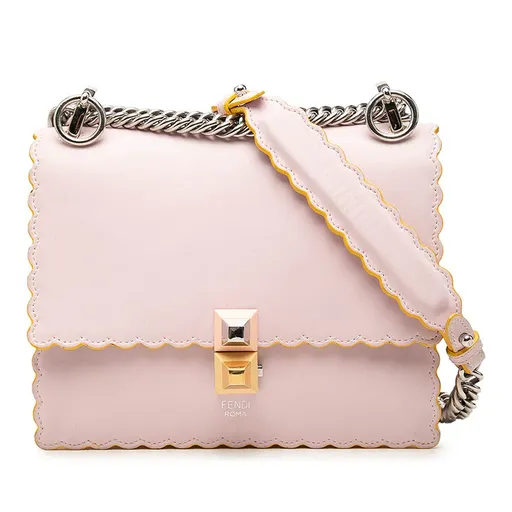
Fendi
Small Scalloped Leather Kan I Crossbody
View piece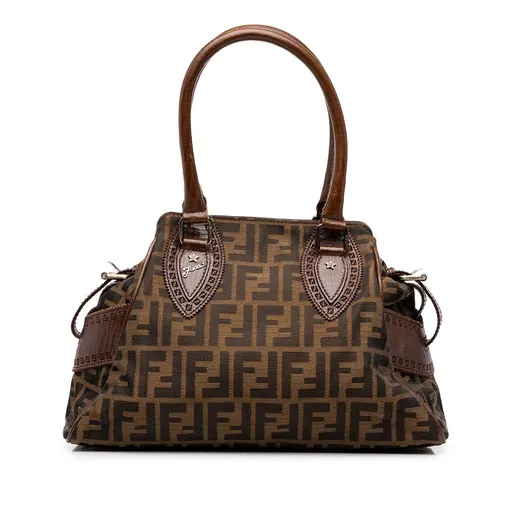
Fendi
Zucca Canvas Etniko Handbag
View piece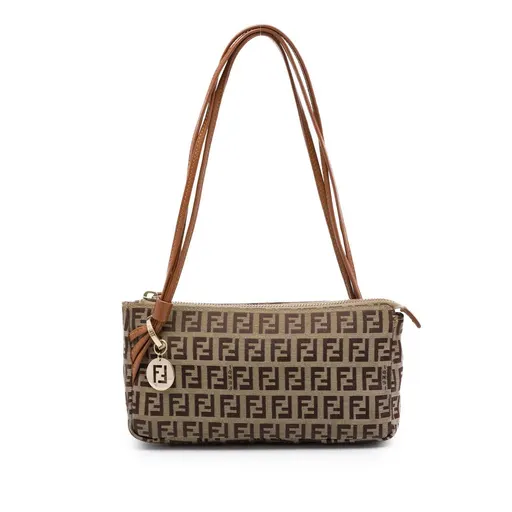
Fendi
Zucchino Canvas Triple Strap Pochette Shoulder Bag
View piece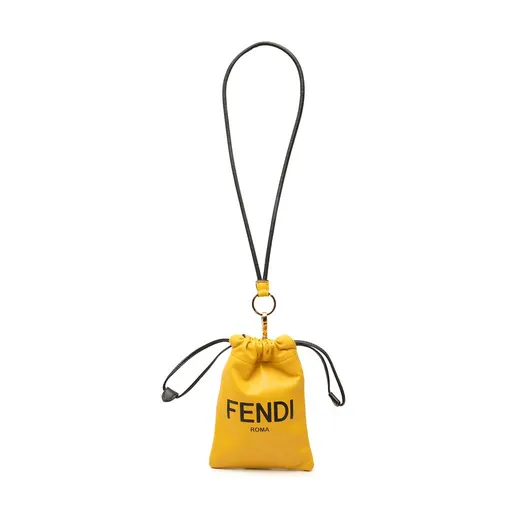
Fendi
Nappa Logo Neck Phone Pouch
View piece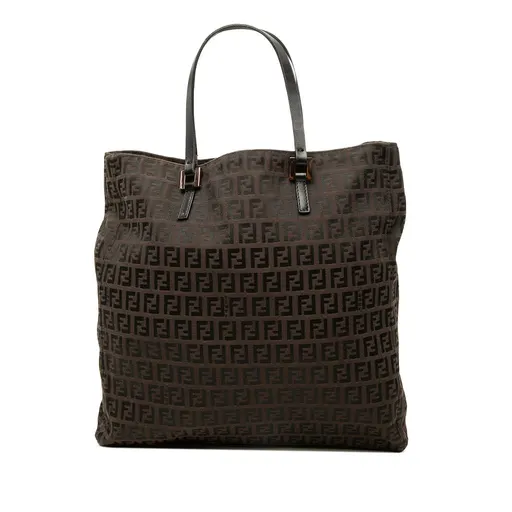
Fendi
Zucchino Canvas Tote
View piece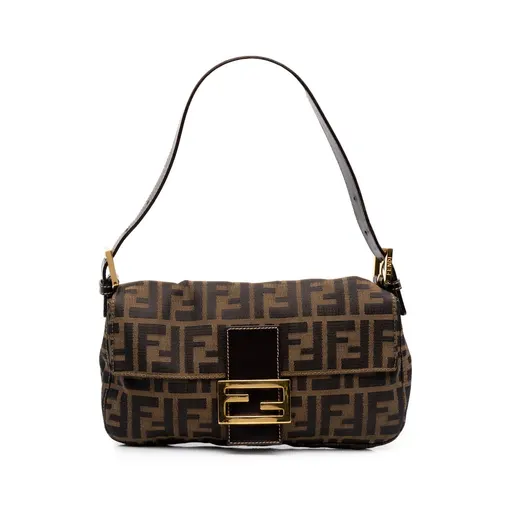
Fendi
Zucca Canvas Baguette
View piece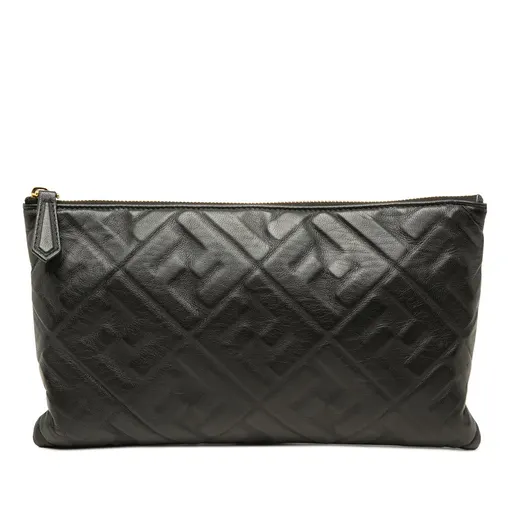
Fendi
Embossed Leather FF 1974 Clutch
View piece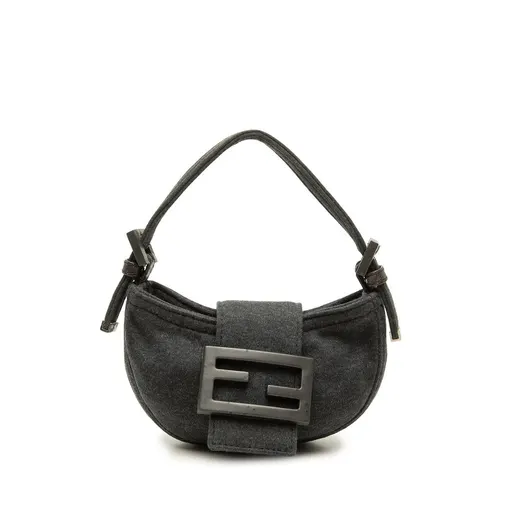
Fendi
Mini Wool Croissant Handbag
View pieceLibas Collective
Decode the code first: our free Fendi serial number checker reads the marking on your bag in seconds — then use this guide for everything the code cannot tell you.
Shop Pre-Owned Fendi Bags
Browse authenticated pre-owned Fendi pieces — fairly priced and delivered across the UAE.
More Luxury Authentication Guides
Shopping for pre-owned luxury? Make sure you can spot the real thing across every major brand:
- How to Authenticate a Louis Vuitton Bag
- How to Authenticate a Chanel Bag
- How to Authenticate a Gucci Bag
- How to Authenticate a Hermès Bag
- How to Authenticate a Dior Bag
- How to Authenticate a Prada Bag
- How to Authenticate a Fendi Bag
- How to Authenticate a Balenciaga Bag
- How to Authenticate a Celine Bag
- How to Authenticate a Bottega Veneta Bag
- How to Authenticate a Goyard Bag
- How to Authenticate a Loewe Bag
- How to Authenticate a Saint Laurent (YSL) Bag
Where to Find a Fendi Serial Number
Every Fendi bag made after the 1980s carries a serial number, so on a modern piece its absence is a red flag in itself.
Location
It is embossed on the reverse of a leather tag, or on a narrow leather tag sewn into a seam, corner or interior pocket — position varies by model and era, so check all three.
Format
An alpha-numeric string separated by dashes, typically 15 to 17 characters. Where the bag still has its authenticity card, the serial on the bag and the number on the card must be identical; a card that does not match the bag is a common resale scam.
What a code can and cannot tell you. A correctly formatted code does not prove a bag is genuine — counterfeiters reproduce code formats accurately, and many do. Read the code for what it tells you about where and when the bag was made, then judge authenticity on materials, stitching, hardware and stamp quality together.
Frequently Asked Questions
How do I find the serial number on a Fendi bag?
Authentic Fendi bags have a leather interior label sewn into the lining — never glued. The label reads FENDI on the first line, Roma on the second, and Made in Italy below. A serial number consisting of letters and numbers is printed below this. Bags with a missing label, glued label, or incorrect layout are almost certainly fake.
What should the Fendi FF logo look like?
The Fendi FF (Fun Fur or Fendi Forever) double-F logo should be perfectly mirrored and symmetrical. On Fendi zucca canvas, the pattern repeats consistently without misalignment at seams or edges. The FF logo should appear sharp and clear — never blurry, uneven, or offset. Fendi always ensures the pattern is centred on the front of the bag.
What hardware should a real Fendi bag have?
Authentic Fendi hardware is solid metal — heavy, well-finished, and stamped with FENDI where appropriate. Zippers bear the Fendi name and operate smoothly with no resistance or misalignment. Lightweight, hollow-feeling, or plastic hardware is a clear indicator of a counterfeit Fendi bag.
Is the Fendi Baguette easy to fake?
The Fendi Baguette is one of the most counterfeited bags in the world. Key authentication points include the stitching (tight, even, and consistent), the FF logo alignment on the front flap, the weight and quality of the hardware, and the interior label. The signature clasp should feel solid and click firmly — loose or flimsy clasps are a red flag.
Where are Fendi bags made?
All authentic Fendi bags are made in Italy. The country of manufacture is stated on the interior label. Bags claiming to be Fendi but manufactured elsewhere are not genuine. Fendi's primary atelier is in Rome, and this heritage is reflected on every interior label.
What does the logo placement look like on a genuine Fendi bag?
Authentic Fendi uses a crisp, evenly-spaced FF (Zucca) monogram or raised “FENDI”/“FENDI ROMA” lettering; on the Baguette the FF clasp should be centred and the pattern should align symmetrically across the seams. Check the heat-stamped logo font, the metal “Fendi made in Italy” plaque and serial, and even stitching — blurry logos, a misaligned monogram or a wrong-font plaque are red flags.